Skip to content

Dreamforce Tips for First-Timers: A Do's and Don'ts Guide

  • Salesforce
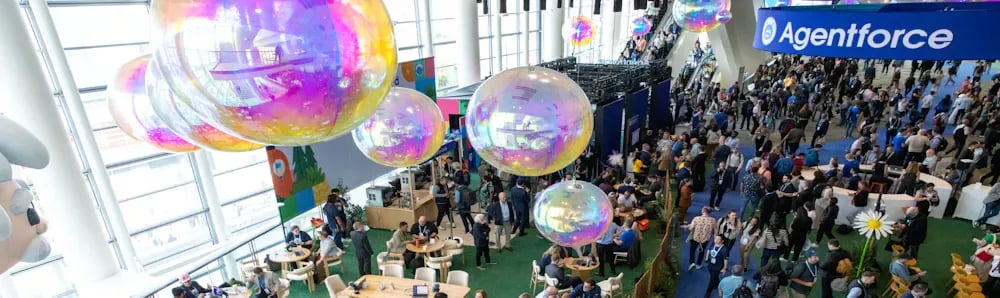
Attendees gather in Dreamforce's Campground area outside Moscone Center, with a rock-and-waterfall display and an Agentforce banner above the entrance.

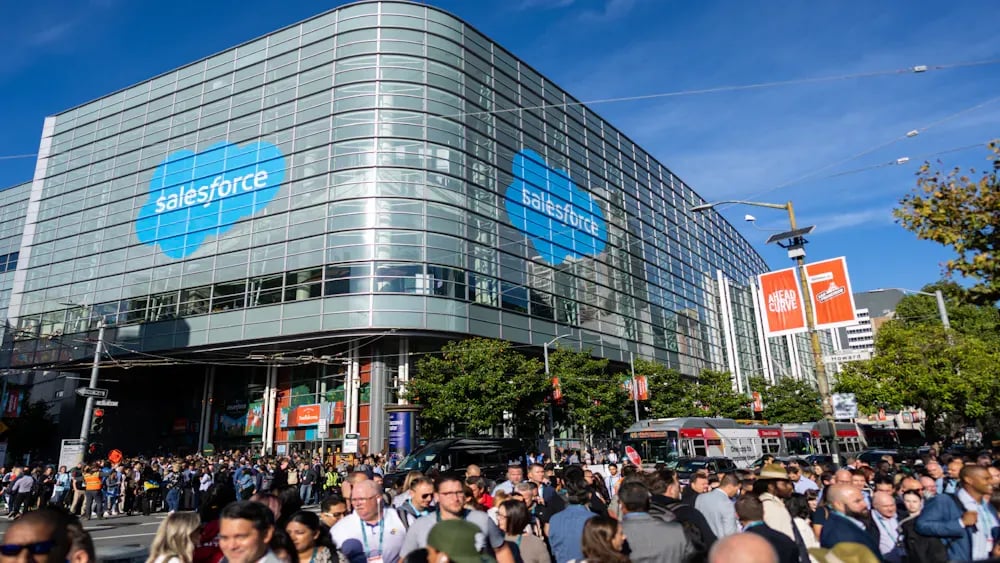
The first time you walk up to Moscone Center during Dreamforce, you feel it before you see it: thousands of conversations at once, lanyards and hoodies everywhere, coffee lines that turn into product discussions, and a Campground that looks part theme park, part tech lab.

It's exciting and a little overwhelming at the same time. This guide covers the do's and don'ts that help you get the most out of the week without the missteps.

Set your priorities before you land

Dreamforce is designed to give you FOMO, so decide upfront what you're actually there for.

Do:

  • Pick three priorities before you land. For example: learn how enterprises are adopting AI responsibly, evaluate data quality tools, and meet two peers in your industry.
  • Translate those priorities into 5 to 7 must-attend sessions or demos, with a backup for each slot in case a room fills up. It happens more often than you'd expect.
  • Block 20-30% of your calendar as open exploration time. The best conversations often happen off-schedule.

Don't:

  • Don't try to see everything. You'll get more value by going deeper on fewer themes than by covering all of them thinly.
  • Don't book back-to-back sessions across different venues with no travel time in between. You'll end up missing large chunks of both.

Plan your logistics

Do:

  • Arrive early for keynotes and flagship product sessions. Lines form fast, and overflow lounges are a good backup.
  • Use the Salesforce Events app to favorite more sessions than you can attend, and turn on notifications for room changes and overflow options. It's available on Google Play and the App Store.
  • Wear comfortable shoes. You'll clock over 10,000 steps a day without trying.
  • Pack a battery pack and charger, a water bottle, a light layer for variable air conditioning, mints, and a small notebook. A few sticky notes help with quick follow-ups.

Don't:

  • Don't assume you can walk into every session. Popular sessions genuinely cap out.
  • Don't underestimate the Bay Area's microclimates. Mornings run chilly, middays get sunny, and evenings turn breezy, so layering matters.

Navigate the venue

Do:

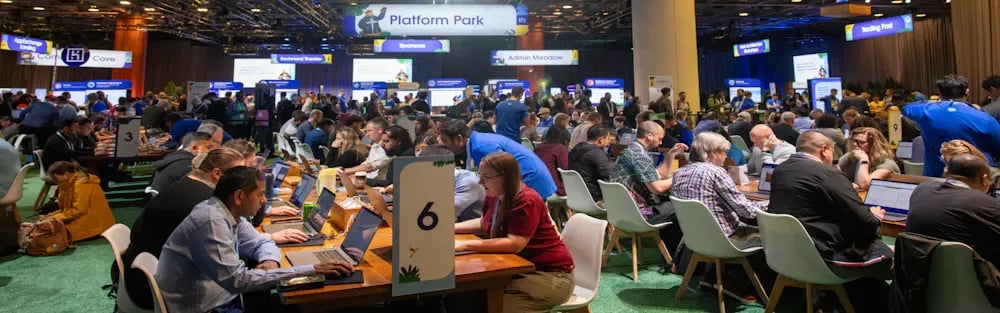
  • Start with a reconnaissance lap. Note the zones for Sales, Service, Data, AI, Industries, and the partners you actually need to see.
  • Book targeted demos ahead of time, and arrive with a real use case. Ask what problem the product solved, how fast, and for whom.
  • Collect stories and experiences, not just swag. Photos of booth slides and a quick voice note beat a bag full of stress.

Don't:

  • Don't let every booth scan your badge "just because." Be selective, since your inbox will thank you later.
  • Don't monopolize a booth staffer if other people are waiting. Grab a card, book a follow-up, and keep it moving.

Make sessions work for you

Do:

  • Sit near a mic if you plan to ask a question, and keep it concise and specific to your scenario.
  • Prioritize customer stories and architecture deep dives. They're the sessions that turn strategy into a playbook you can actually use.
  • Follow speakers on LinkedIn and send a short thank-you afterward. It's the easiest way to turn content into a connection.

Don't:

  • Don't record sessions or photograph restricted slides. Some content is under NDA or roadmap-sensitive, and the rules are enforced.
  • Don't scroll your phone in the front row. Step out if you need to take a call.

Network with intention

Do:

  • Have a one-liner ready: who you are, what you're focused on this quarter, and what you're hoping to learn. Then ask the other person the same.
  • Use a micro intro like: "I liked your point on data lineage, can I ask how you handled X?" People are more generous with detail than you'd expect.
  • Follow up within 24 hours with one specific next step. A short, personal message beats a generic "great to meet you."

Don't:

  • Don't pitch strangers without context. Enterprise buyers notice a sales pitch immediately.
  • Don't hover at the edge of a group. Say hello, add something to the conversation, and it stops feeling like a transaction.

Manage your energy

Do:

  • Hydrate. Lines happen, and the walking adds up faster than you expect.
  • Find a quiet zone. Meditation lounges and tucked-away hotel lobbies offer a reset when you need one.
  • Choose one evening event that genuinely matters to you rather than trying to hit all of them.

Don't:

  • Don't skip meals because you're "too busy." You'll feel it by midafternoon.
  • Don't schedule an early breakfast after a late night unless you mean it. Pace yourself over the full week.

Dreamfest and evening events

Do:

  • Wear comfortable shoes and bring a light jacket.
  • Set a meeting spot if you're with a group, since cell networks get congested in a crowd that size.
  • Enjoy the show, but remember that the best conversations often happen at the edges of a venue, not in the middle of it.

Don't:

  • Don't count on hearing every word if you're far from the stage. If networking is your priority, pick an event where you can actually talk.
  • Don't overcommit to three parties across the city in one night. You'll spend the evening in line and in transit instead of at any of them.

For enterprise attendees

If you're there to inform a data or platform strategy rather than just to learn, treat the week as a working trip.

Do:

  • Tie every session back to your roadmap: AI adoption, data governance, RevOps efficiency, or service modernization. Capture what you'll test in the next 90 days.
  • Prioritize keynotes and product or industry sessions that align with your stack. Note deprecations, pilot programs, and partner ecosystems.
  • Book working sessions with partners and Salesforce experts. Bring your own diagrams and ask for reference architectures and change management guidance.

Don't:

  • Don't confuse vision with viability. A great demo isn't the same as a production-ready program, so ask about security, data lineage, and adoption.
  • Don't leave without an action list: three decisions, two experiments, and one risk to investigate.

Hungry for more?

Ready to take control?

With a product tour you can walk through the product yourself without installing anything, or book a demo for a guided look.